Monday, September 5, 2016

A Look Back in Time (Part 1): Review stats - 2001 through 2014 (my editorial career)

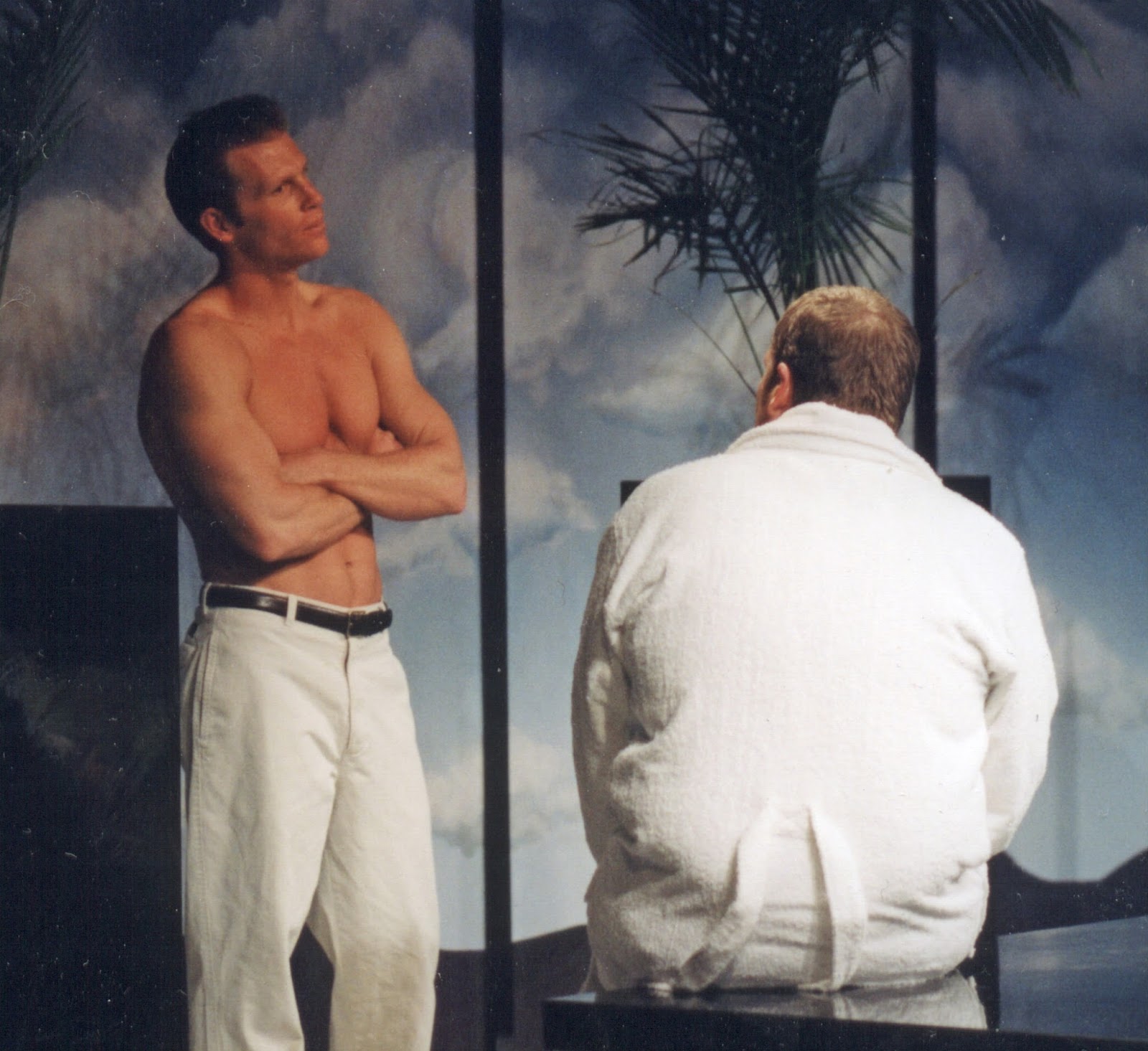
Can you guess who the gentleman with his back to us is?
If memory serves me correct, it was my first introduction to the
great Joe Bailey way back in May 2002!

Every year around Wilde Awards time I'm asked the following questions: How many reviews have we done over the years? And how many shows have I personally reviewed?

Although I've kept track of every review published by Between The Lines and/or EncoreMichigan.com from the start of my editorial career in the fall of 2001 through its end in August 2016, much of it has been in different types of documents (Word vs. Excel, for example) and in formats that varied considerably from document to document. And so because of the sheer volume of information and the differences in which it was recorded, I'd never taken the time to sort through it all and assemble the material into a single, coherent, easy-to-follow document.

Until now, that is.

And once I'd collected the information into a database that allowed me to analyze it in great detail, I decided it would be interesting to view it a number of different ways. The results, I discovered, were quite intriguing. I think you will, too - which I'll separate into two separate posts. Today's analysis will cover the years in which I first joined Between The Lines as a critic and ends with my simultaneous retirements as theater and arts editor of BTL and editorial director of EncoreMichigan.com, both of which occurred with the last review of 2014.

But first the usual caveats: Every attempt was made to be as accurate as possible while assembling this data. However, it's possible that a show or two may have been missed, or that last minute changes to our review schedule may not have been documented in the original records. As such, we apologize for any errors that may appear in this data.

The Calamia Years:


I call these "The Calamia Years" because except for my first few months at BTL during which I reported to an editor, the vast majority of my 14 years there was as an editor. As such, the decisions regarding which shows to review, preview or otherwise write about were mine. And all copy was edited by me. In other words, other than the rates paid to our freelancers, I was in control of our theater coverage - and that continued until my retirement on Dec. 20, 2014.

So how did I do?

In total, 1700 shows produced or presented by 125 companies were reviewed by 22 critics in 14 years. That averages out to approximately 121 productions per calendar year. That's pretty damn good, don't you think?

Here's the number of years for each of the 14 calendar years:

        Year     Reviews
1 2001   10
2 2002   54
3 2003   72
4 2004   97
5 2005   99
6 2006   90
7 2007   119
8 2008   103
9 2009   116
10 2010   164
11 2011   210
12 2012   187
13 2013   178
14 2014   201
1700

This next chart breaks down the number of reviews by critic. My first review for BTL was "Guys & Dolls" at Detroit's Fisher Theatre on Oct. 9, 2001 (or possibly the 10th, I'm not sure), and I was the sole critic for the first 102 reviews. John Quinn joined me almost two years later (in September 2003), and the rest - as they say - is history!

One thing you'll notice as you match this chart to the one above is that the total number of reviews don't match. That's OK; they're not supposed to, because multiple critics were used to review two years of the BoxFest Detroit Festival. As such, each critic is credited separately in the chart below.

Critic


1 Calamia 613 36.0%
2 Quinn 354 20.8%
3 Redman 168 9.9%
6 Blackburn 124 7.3%
7 Kohn 91 5.3%
8 Bethune 69 4.1%
9 Hayes-Harmer 69 4.1%
10 McKee 51 3.0%
11 Casadei 45 2.6%
12 Margolin 45 2.6%
13 Rubens 39 2.3%
14 Merrell 27 1.6%
15 Parrent 6 0.4%
16 Kennedy 2 0.1%
1703 100%

This next chart documents which theaters were reviewed and how many times we visited each. To make it easy for my readers who want to easily find their favorite theater, this chart is listed alphabetically.

Producer / Presenter
1 1515 Broadway 5
2 4Theatre Sake 1
3 7th Heaven 1
4 8th Wonder Theatre 1
5 About Face Theatre 1
6 African Renaissance Theater of Detroit 5
7 Andiamo Novi Theatre 15
8 Arbor Opera Theater 1
9 Bailiwick Repertory Theatre 1
10 Barn Theatre 15
11 Blackbird Theatre 32
12 BoarsHead Theater 38
13 BoxFest Detroit 6
14 Breathe Art Theatre Project 19
15 Broadway Grand Rapids 7
16 Broadway in Detroit: Detroit Opera House 11
17 Broadway in Detroit: Fisher Theatre 74
18 Broadway in Detroit: Masonic Temple 8
19 Broadway Onstage Live Theatre 28
20 Capital TheaterWorks 3
21 Center Stage Entertainment 1
22 Cornwell's Dinner Theatre 5
23 Detroit Actors Guild Productions 1
24 Detroit Ensemble Theatre 16
25 Detroit Repertory Theatre 42
26 Epicenter Theatre Group 3
27 Evelyn Orbach Productions 1
28 Farmers Alley Theatre 32
29 Five Cents Short 1
30 Flanders Theater Company 4
31 Flint Youth Theatre 3
32 Fratellanza 1
33 Front Row Productions 1
34 Gem & Century Theatres 30
35 George Productions 1
36 Go Comedy! Improv Theater 51
37 Great Escape Stage Company 8
38 Henry Ford College's Virtual Theatricality Lab 1
39 Hilberry Theatre 87
40 Hole in the Wall Theatre Company 1
41 Hope Summer Repertory Theatre 25
42 Improv Inferno 8
43 Ixion 2
44 Khoros, Inc. 1
45 LCC Theatre 1
46 Macomb Center for the Performing Arts 1
47 Magenta Giraffe Theatre Company 16
48 Mason Street Warehouse 17
49 Matrix Theatre Company 20
50 Meadow Brook Theatre 77
51 Michigan Actors Studio 3
52 Michigan Opera Theatre 20
53 Michigan Shakespeare Festival 26
54 Miller Auditorium 2
55 Mixed Company Troupe 1
56 Mosaic Youth Theatre of Detroit 1
57 Motoprism 1
58 Music Hall Center for the Performing Arts 2
59 Nerve 1
60 New York Dinner Theater 1
61 Nieto Productions 2
62 NoSuch Group 1
63 Olympia Entertainment & The Ringwald 1
64 Olympia Entertainment: City Theatre 19
65 Olympia Entertainment: Fox Theatre 15
66 Olympia Entertainment: Joe Louis Arena 2
67 Open Book Theatre Company 2
68 Palace of Auburn Hills 1
69 Performance Network Theatre 79
70 Phases Theatre Company 2
71 Pigeon Creek Shakespeare Company 12
72 Planet Ant Theatre 113
73 Play with Your Food Dinner Theatre 1
74 Plowshares Theatre Company 21
75 PuppetART 4
76 Puzzle Piece Theatre 4
77 Riverbank Theatre 1
78 Shakespeare in Detroit 2
79 Shop Floor Theatre Company 1
80 Slipstream Theatre Initiative 1
81 StarBrite Theatrical Productions 20
82 Stark Turn Players 1
83 Stormfield Theatre 8
84 Stratford Shakespeare Festival 12
85 Summer Circle Theatre 5
86 The Abreact 42
87 The Acorn Theater 1
88 The Actors' Company 3
89 The AKT Theatre Project 6
90 The Bach Dor Shakespeare Company 1
91 The Box Theater 26
92 The Dio - Dining & Entertainment / Dionysus Theatre 10
93 The Elizabeth Theater Company / Park Bar Theater 6
94 The Encore Musical Theatre Company 32
95 The Hinterlands 1
96 The Jewish Ensemble Theatre Company 66
97 The Last Word LLC 1
98 The Music Box at The Max / Detroit Symphony Orchestra 1
99 The New Theatre Project 8
100 The Penny Seats Theatre Company 1
101 The Purple Rose Theatre Company 49
102 The Ringwald Theatre / Who Wants Cake? Theatre 75
103 The Second City - Detroit 24
104 The Snug Theatre 11
105 Theatre 1 1
106 Thick Knot Rhythm Ensemble 3
107 Threefold Productions 3
108 Tibbits Opera House / Tibbits Summer Theatre 21
109 Tipping Point Theatre 36
110 TNT Productions 3
111 Torch With a Twist 1
112 Two Muses Theatre 13
113 UDM Theatre Company 37
114 Uncovered Theatre Company 1
115 University Musical Society 4
116 Van Buren Street Theatre 1
117 Walk & Squawk Performance Project 3
118 Water Works Theatre Company 8
119 West End Productions 1
120 Wharton Center for the Performing Arts 13
121 What A Do  Theatre 14
122 Wild Swan Theater 2
123 Williamston Theatre 46
124 Y-Arts Detroit 1
125 Zeitgeist Theatre 6
1700

Today's final chart presents the same data as the chart above, but sorted by the number of times we reviewed at each theater, from the most visits to the least. Would you have guessed the Top 5 theaters in the following sequence?

Producer / Presenter
1 Planet Ant Theatre 113
2 Hilberry Theatre 87
3 Performance Network Theatre 79
4 Meadow Brook Theatre 77
5 The Ringwald Theatre / Who Wants Cake? Theatre 75
6 Broadway in Detroit: Fisher Theatre 74
7 The Jewish Ensemble Theatre Company 66
8 Go Comedy! Improv Theater 51
9 The Purple Rose Theatre Company 49
10 Williamston Theatre 46
11 Detroit Repertory Theatre 42
12 The Abreact 42
13 BoarsHead Theater 38
14 UDM Theatre Company 37
15 Tipping Point Theatre 36
16 Blackbird Theatre 32
17 Farmers Alley Theatre 32
18 The Encore Musical Theatre Company 32
19 Gem & Century Theatres 30
20 Broadway Onstage Live Theatre 28
21 Michigan Shakespeare Festival 26
22 The Box Theater 26
23 Hope Summer Repertory Theatre 25
24 The Second City - Detroit 24
25 Plowshares Theatre Company 21
26 Tibbits Opera House / Tibbits Summer Theatre 21
27 Matrix Theatre Company 20
28 Michigan Opera Theatre 20
29 StarBrite Theatrical Productions 20
30 Breathe Art Theatre Project 19
31 Olympia Entertainment: City Theatre 19
32 Mason Street Warehouse 17
33 Detroit Ensemble Theatre 16
34 Magenta Giraffe Theatre Company 16
35 Andiamo Novi Theatre 15
36 Barn Theatre 15
37 Olympia Entertainment: Fox Theatre 15
38 What A Do  Theatre 14
39 Two Muses Theatre 13
40 Wharton Center for the Performing Arts 13
41 Pigeon Creek Shakespeare Company 12
42 Stratford Shakespeare Festival 12
43 Broadway in Detroit: Detroit Opera House 11
44 The Snug Theatre 11
45 The Dio - Dining & Entertainment / Dionysus Theatre 10
46 Broadway in Detroit: Masonic Temple 8
47 Great Escape Stage Company 8
48 Improv Inferno 8
49 Stormfield Theatre 8
50 The New Theatre Project 8
51 Water Works Theatre Company 8
52 Broadway Grand Rapids 7
53 BoxFest Detroit 6
54 The AKT Theatre Project 6
55 The Elizabeth Theater Company / Park Bar Theater 6
56 Zeitgeist Theatre 6
57 1515 Broadway 5
58 African Renaissance Theater of Detroit 5
59 Cornwell's Dinner Theatre 5
60 Summer Circle Theatre 5
61 Flanders Theater Company 4
62 PuppetART 4
63 Puzzle Piece Theatre 4
64 University Musical Society 4
65 Capital TheaterWorks 3
66 Epicenter Theatre Group 3
67 Flint Youth Theatre 3
68 Michigan Actors Studio 3
69 The Actors' Company 3
70 Thick Knot Rhythm Ensemble 3
71 Threefold Productions 3
72 TNT Productions 3
73 Walk & Squawk Performance Project 3
74 Ixion 2
75 Miller Auditorium 2
76 Music Hall Center for the Performing Arts 2
77 Nieto Productions 2
78 Olympia Entertainment: Joe Louis Arena 2
79 Open Book Theatre Company 2
80 Phases Theatre Company 2
81 Shakespeare in Detroit 2
82 Wild Swan Theater 2
83 4Theatre Sake 1
84 7th Heaven 1
85 8th Wonder Theatre 1
86 About Face Theatre 1
87 Arbor Opera Theater 1
88 Bailiwick Repertory Theatre 1
89 Center Stage Entertainment 1
90 Detroit Actors Guild Productions 1
91 Evelyn Orbach Productions 1
92 Five Cents Short 1
93 Fratellanza 1
94 Front Row Productions 1
95 George Productions 1
96 Henry Ford College's Virtual Theatricality Lab 1
97 Hole in the Wall Theatre Company 1
98 Khoros, Inc. 1
99 LCC Theatre 1
100 Macomb Center for the Performing Arts 1
101 Mixed Company Troupe 1
102 Mosaic Youth Theatre of Detroit 1
103 Motoprism 1
104 Nerve 1
105 New York Dinner Theater 1
106 NoSuch Group 1
107 Olympia Entertainment & The Ringwald 1
108 Palace of Auburn Hills 1
109 Play with Your Food Dinner Theatre 1
110 Riverbank Theatre 1
111 Shop Floor Theatre Company 1
112 Slipstream Theatre Initiative 1
113 Stark Turn Players 1
114 The Acorn Theater 1
115 The Bach Dor Shakespeare Company 1
116 The Hinterlands 1
117 The Last Word LLC 1
118 The Music Box at The Max / Detroit Symphony Orchestra 1
119 The Penny Seats Theatre Company 1
120 Theatre 1 1
121 Torch With a Twist 1
122 Uncovered Theatre Company 1
123 Van Buren Street Theatre 1
124 West End Productions 1
125 Y-Arts Detroit 1

1700

Tuesday, August 30, 2016

The 2016 Wilde Awards honor best productions and performances of Michigan’s 2015-16 professional theater season


ANN ARBOR, Mich – It was another Wilde night at West Bloomfield’s Berman Center for the Performing Arts, as Michigan’s professional theater community came together for The 15th Annual Wilde Awards presented by EncoreMichigan.com. Established in 2002, The 2016 Wilde Awards honored the best productions, performances and technical accomplishments of the recently concluded 2015-16 season.

In all, 37 artists and 26 productions produced or presented by 20 professional theaters across the state earned an award. In an unusual feat, no single show, artist or production dominated the awards – a trend that is becoming more common with each passing year.

“Although it might look like we’re trying to spread the number of awards across as many theaters and artists as possible, that’s certainly never our intent,” said co-founder of The Wilde Awards Donald V. Calamia. “But when you have more than a dozen critics spanning out across the state reviewing nearly 250 shows produced or presented by more than five dozen theaters like we did this past season, it becomes very tough for one artist, one show or one company to win multiple awards. And to me, that’s a good thing, because it’s a sign that great work is happening in theaters of every size, shape and budget – and they’re being recognized for it.”

This year’s top theaters – Saugatuck’s Mason Street Warehouse, Hamtramck’s Planet Ant Theatre, and Ferndale’s Ringwald Theatre – each earned four awards. The top production was Mason Street’s “Cabaret,” with four wins; Planet Ant’s “Antenna” was next with three. And only Kurt Stamm, founding artistic director of Mason Street Warehouse, was the only artist to win multiple awards – with two.

“The wealth of talent on display at theaters all across the state is evident by these awards,” said David Kiley, owner and publisher of EncoreMichigan.com. “Since taking over the company last year, I’ve been blown away by the work I’ve seen on our stages. And this year’s results – with so many people being honored for their work – should prove to the world that Michigan can compete with the best of them when it comes to producing high quality theater.”

The awards were determined by EncoreMichigan.com’s team of professional critics who reviewed 241productions produced or presented by 66 professional theater companies located in 36 communities across the state. The critics included Paula Bradley, Calamia, Tom Emmott, Carolyn Hayes-Harmer, Marin Heinritz, Tanya Gazdik Irwin, Kiley, Martin F. Kohn, Jenn McKee, Sue Merrell, Amy J. Parrent, Frank Anthony Polito, John Quinn and Bridgette M. Redman.

Thespians from theaters around the state attended the event that began at 6:30 p.m. with a social hour of cocktails and hors d’oeuvres; the awards presentation began at 8 p.m. Hosted by Calamia, the evening included performances of songs from shows nominated for Best Musical, and an original mini-production created by Brandy Joe Plambeck of The Ringwald Theatre.

“It’s been a long-standing tradition to poke fun of ourselves at The Wilde Awards, and Brandy Joe’s spoof of ‘Romeo and Juliet’ did just that. While the awards themselves we take seriously, we can’t help but laugh at ourselves and our industry at an event such as this, since it’s not often that the community comes together in a single spot to celebrate what ties us together,” Calamia said. “And laughter IS the best medicine, after all!”

Other top productions include “Charlotte’s Web” by Ann Arbor’s Wild Swan Theater (Best Theater for Young Audiences; Best Performance – Theater for Young Audiences); “Mary Poppins” by Augusta’s Barn Theatre (Best Design – Sets; Best Design – Lights); “The Rivals” by Jackson’s Michigan Shakespeare Festival (tie for Best Supporting Actress – Play; Best Design – Costumes); and “The Passenger” by Detroit’s Michigan Opera Theatre (Best Opera; Best Performance – Opera).

Even the recently defunct Performance Network Theatre walked away with two awards for its spectacular production of “Who’s Afraid of Virginia Woolf?” (tied for Best Play; Best Performance, Lead Actor – Play). “Performance Network is the winner of more Wilde Awards than any other theater in our history, and they certainly left us on a high-note,” said Kiley. “They’ll truly be missed.”

Special awards were presented to Rochester’s Meadow Brook Theatre in honor of its 50th season; Hal Soper of Planet Ant Theatre; David Regal in honor of his retirement from the University of Detroit Mercy and the UDM Theatre Company; Tom and Kathy Vertin of The Snug and Riverbank Theatres (Marine City); Scott Myers of Little Man Public Relations; and recently retired George Cvetanovski of the 7 Brothers Bar, whose love for the Metro Detroit theater community will be missed.

Only shows that were produced or presented by Michigan’s professional theaters and opera companies—both union and non-union—and reviewed by EncoreMichigan.com’s theater critics during the 2015-16 season were eligible for a 2016 Wilde Awards nomination. Shows had to be performed for four consecutive days or more or over two weekends or more to be eligible for a review.

The 2016 Wilde Awards were sponsored by Comcast, Pride Source Media Group, Actors’ Equity Association, The Berman Center for the Performing Arts, and Little Bill’s Trophies.

EncoreMichigan.com is web-based publication established in 2008 that is focused on Michigan's professional theater industry. Designed as a one-stop shop for consumers, industry professionals and others with an interest in the performing arts, EncoreMichigan.com is updated daily and packed with informative interviews, insightful reviews, comprehensive show listings, thoughtful commentary, audition notices, podcasts and much, much more. Original content is created by a dedicated team of veteran freelance journalists and theater professionals. For more information about EncoreMichigan.com, log onto www.encoremichigan.com.


WINNERS: The 2016 Wilde Awards

Best Musical
Cabaret, Kurt Stamm, director; Mason Street Warehouse

Best of The Bard
Henry IV, Janice L. Blixt, director; Michigan Shakespeare Festival

Best One-Person Show
From Broadway to Obscurity, Brian P. Sage, director; Detroit Public Theatre

Best Opera
The Passenger, Rob Kearley, director; Michigan Opera Theatre

Best Original Production or One-Act
Antenna, Mike McGettigan, director; Planet Ant Theatre

Best Play
A Streetcar Named Desire, Randy Wolfe, director; What A Do Theatre
Who's Afraid of Virginia Woolf?, Suzi Regan, director; Performance Network Theatre

Best Theater for Young Audiences
Charlotte's Web, Lauren Mounsey, director; Wild Swan Theater

Best Touring Production
A Christmas Carol, Graham McLaren, director; University Musical Society

Best Performance - One-Person Show
Sebastian Gerstner, Chesapeake; Theatre Nova
Richard Payton, Buyer & Cellar; The Ringwald Theatre

Best Performance - Opera
Adrienn Miksch, The Passenger; Michigan Opera Theatre

Best Performance - Original Production or One-Act
Lauren Bickers, Antenna; Planet Ant Theatre

Best Performance - Rising Star
Maxim Vinogradov, BFs!; Slipstream Theatre Initiative

Best Performance - The Bard
David Montee, As You Like It; Interlochen Shakespeare Festival

Best Performance - Theater for Young Audiences
Sandy Ryder, Charlotte's Web; Wild Swan Theater

Best Performance, Lead Actor – Musical
Christopher Behmke, Cabaret; Mason Street Warehouse

Best Performance, Lead Actor – Play
Joe Bailey, The Whale; UDM Theatre Company and The Ringwald Theatre
John Seibert, Who's Afraid of Virginia Woolf?; Performance Network Theatre

Best Performance, Lead Actress – Musical
Stacey Harris, Cabaret; Mason Street Warehouse

Best Performance, Lead Actress – Play
Jamie Warrow, A Streetcar Named Desire; The Ringwald Theatre

Best Performance, Supporting Actor – Musical
Vince Kelley, Heathers: The Musical; The Ringwald Theatre

Best Performance, Supporting Actor – Play
Dax Anderson, Orson's Shadow; Planet Ant Theatre

Best Performance, Supporting Actress – Musical
Shinnerrie Jackson, Ghost the Musical; Barn Theatre

Best Performance, Supporting Actress – Play
Wendy Katz Hiller, The Rivals; Michigan Shakespeare Festival
Allison Megroet, Precious Little; Matrix Theatre Company

Best Choreography
Kurt Stamm, Cabaret; Mason Street Warehouse

Best Design – Costumes
Laura Heikkinen, R.U.R.; Puzzle Piece Theatre
Melanie Schuessler, The Rivals; Michigan Shakespeare Festival

Best Design – Lights
Andrew Carson, Mary Poppins; Barn Theatre

Best Design – Props
Thomas Koehler, August: Osage County; What A Do Theatre

Best Design - Sets
Shy Iverson, Mary Poppins; Barn Theatre

Best Design - Sound or Video
Mike Eshaq, Antenna; Planet Ant Theatre
Tom Whalen and Noele Stollmack, 2AZ; The Purple Rose Theatre Company

Best Music Direction
Tyler Driskill, Into the Woods; The Encore Musical Theatre

Best New Script
David Wells and R. Mackenzie Lewis, Irrational; Theatre Nova


SPECIAL AWARDS:

Critics’ Choice Award:
Meadow Brook Theatre
50th Anniversary

Critic’s Choice Award
George Cvetanovski
7 Brothers Bar

Founders Award for Excellence
Hal Soper
Planet Ant

Jim Posante Community Pride Award
Scott Myers

Council Cargle Award for Dedication to the Michigan Theatre Community
David Regal

Publisher’s Award
Tom and Kathy Vertin
The Snug and Riverbank Theatres


edited 8/31/16

Saturday, August 27, 2016

The 2016 Wilde Awards: Yes, the critic DOES get cranky

From The 2003 Wilde Awards: Don Calamia and Serena Escevelle


People have teased me for some time now that the name of this blog (and my nickname) is a misnomer. I'm rarely cranky, they tell me. So why call it that?

You're about to find out why: Today I'm cranky as hell!

It's hard to believe that the upcoming Wilde Awards is now in its 15th year. It seems like it was only a short while ago that Jan Stevenson, Susan Horowitz and I thought it was important to bring two related groups together - thespians and the LGBT community, between which there is a lot of crossover - to celebrate the great work produced by our professional theaters. That first year at The Furniture Factory in what's now called Midtown Detroit (among other, more recent names) was a much smaller affair, and my first co-host was the lovely and memorable Serena Escevelle, a popular, up-and-coming female impersonator of that era.

But as times changes, so too did the awards - and who owned them. But no matter who was paying the bills, I always considered it a great honor and responsibility to produce the show and manage the nominations process. And I truly appreciate the hard work everyone put into making past ceremonies a success.

One thing, however, has never changed throughout the years, and that's this: Producing the show is a royal pain in the ass - a lesson EncoreMichigan.com owner David Kiley is learning as he assumes the job of producer this year. (My role this year was to manage the nominations process, write the script and host the show.)

Producing the annual Wilde Awards is a frustrating and time-consuming process - and it never goes according to plan. As this is David's first attempt at producing the event, he's working hard to make it a memorable one - going so far as to arrange the night's ceremony to be professionally recorded by Comcast for later broadcast. (How cool is that!)

But as he's discovering, the best of intentions don't keep the gremlins away - and Friday's twists and turns were a reminder that a good sense of humor helps keep things in perspective. ("Why are we doing this again?" is a question I asked myself many times since the awards were created back in 2002. And I think the thought has already crossed his mind, as well!)

Roadblocks and detours are to be expected when so many moving parts - and so many people - are involved in a project such as this. But this year we've experienced an extraordinary number of unusual ones. (Since I don't want to give away any secrets, I won't mention them right now. But there have been a few doozies no one could have foreseen!)

Heck, I've even lost yet another co-host, thanks to a job offer that couldn't be resisted. (The road to landing a co-host this year is another tale for another time. Anyone interested in the position? It's still available. The pay is a free ticket, the stress is over in a few hours after which alcohol and sweets are available to soothe the nerves, and it's fun!)

All of this is manageable, of course. Every producer and stage manager faces stuff like this all the time.

It's the rumors, gossip, bitching and complaining from the community itself that drives me especially crazy. And this year is no different.

It's easy to ignore what I hear more than anything: "Why didn't so-and-so or such-and-such-a-play get nominated? I saw it, and it was the best thing I saw all season." It might have been. I don't doubt that. But as a team, it's a safe bet that we saw 5-10 times as many plays as did any individual - and likely more - and so our universe of potential nominations is quite large. So maybe if we were back in the days of reviewing only 75 or 100 shows, many of the "favorites" I hear about would have been nominated. But we've grown way beyond that now, including reviewing shows statewide. And so it's not as easy as it used to be to earn a nomination.

I also pay little attention to the rumors of people boycotting the awards because of one perceived injustice or another. If people want to skip a party that's attended by many of their industry friends and peers, that's their choice.

What's truly frustrating, however, are the destructive whispers and innuendos that creep through various corners of the community, delivering dabs of false information as if they're facts. (Apparently, it's too much of a bother for folks to reach out directly to us to resolve their concerns, when it's far more fun to damage us instead.)

Personally, I'm offended by such crap, as it questions my integrity and is harmful to my reputation, both of which I work very hard to maintain as an honest and trusted advocate for the community.

So what are this year's top rumors that have made their way to me, you might be wondering? In no particular order:

Rumor #1: Nominated theaters that didn't buy a congratulatory ad in this year's expanded Wilde Awards program may not win the award they deserve.

I'm starting with the one that especially pisses me off. As the person who drives the entire nominations process, rumors like this impugn my honesty, integrity and sense of fairness.

Never did this fundraising effort factor in to who would win and who would not this year. In fact, nominations and winners of the adjudicated awards were determined (and set in stone) back on June 11, seven weeks prior to the solicitation David sent out to the community. What's more, if my memory is correct, he hadn't even come up with the idea until sometime in July. So one did not impact the other whatsoever.

And I would never, ever allow such a thing to happen. If it was suggested or forced upon us, my resignation would have been immediate and irrevocable.

(In all fairness, I will admit to changing the winner of one of this year's special awards - but it had to do with the results of the vetting process I did on the group that was initially suggested as the winner. They're not ready yet for such an honor, and so it was changed. In the future? Who knows.)

Rumor #2: The reason for the increase in the number of theaters and individuals who were honored with a nomination this year was to sell more tickets to the awards.

While it's always nice to sell more tickets to help pay for the event - which ain't cheap, by the way - I address this accusation head on in the press release that will be issued this Tuesday announcing the winners. In it, I say this: "(W)hen you have more than a dozen critics spanning across the state reviewing nearly 250 shows produced or presented by more than five dozen theaters like we did this past season, it becomes very tough for one artist, one show or one company to win multiple awards. And to me, that's a good thing, because it's a sign that great work is happening in theaters of every size, shape and budget - and they're being recognized for it."

And I truly believe that!

Now, let me break things down a bit deeper for you: During this past season, we reviewed 241 productions staged or presented by 66 theaters. During the two seasons prior, we averaged 197 performances at 49 venues. That's a significant jump - which helps explain how much tougher the competition was this year. (Why did I average the prior two seasons? Because as some of you might recall, our review seasons fluctuated a bit back then, with one year including only 10 months and the other 14. So the data is now comparing apples and apples, so to speak.)

But then there's this: We also increased the number of adjudicated awards from 25 to 30 - mostly to respond to the many requests we had from the community to once again split many of the acting nominations between "lead" and "supporting" roles. To do that, though, we needed to be mindful that there's a limit to how many awards we can give out on a single night without the audience tiring out and drifting away. And so we made a few other changes as well (some of which were equally not very popular in certain quarters, but you can't please everyone), and the result was an overall increase by five in the number of adjudicated awards given out this year.

So let's do the math, shall we? More award categories + more reviews + more theaters + more artists whose work we've seen = more potential nominations.

It really IS that simple. But if more people show up Monday night, we won't turn them away; we'll be happy to see them!

(Again, in all fairness, there may have been an instance or two when the critics narrowed a category down to two specific individuals, one of whom was already guaranteed a nomination. If nothing else could break a tie and everything else was equal, the artist without a nomination got it. So yes, we may have "spread the wealth" once or twice, but it had nothing to do with selling more tickets; rather, we wanted to see as many artists as possible get recognized for their splendid work.)

Rumor #3: Personal biases and grudges prevented some theaters or artists from getting more nominations.

This, too, really rankles me.

Do theater critics have biases? Or favorites? Of course we do, because contrary to popular belief, we are human, too!

But part of our job as critics is to set those biases aside and focus our attention on the production and performances we see before us, and not let past experiences color our perceptions. As such, our personal opinions - which is what they always are - should always be presented with intelligence, integrity and insight, with never a hint of malice or prejudice. And determining the nominations and winners each year is no different.

So to accuse us of purposely sabotaging the nominations to settle petty, personal grievances is absurd.

I've always viewed my role as manager of the nominations process (which includes determining the winners) as one who pokes, prods, questions and challenges the critics to arrive at the best slate we possibly can. My objective, then, is to keep everyone focused on "the best" of the season, not on outside or past influences of any kind. In the end, I think I've been more successful at it than not, given the different personalities of the critics and the wide variety of shows and performances we're comparing. (Its ain't easy, though, trust me!)

Are we always correct with our decisions? I'd like to think so, but - again - we're human and we occasionally fail in our mission. But I bet we miss the mark far less than some would have us or you believe. (Re-read my response to number 2 above for another reason why I say that.)

In conclusion: Although I'm breathing easier now that I've gotten this off my chest, now I'm anxiously awaiting the reaction to the winners after they're announced. I suspect I already know what will likely cause a few heads to explode, and I can't wait to see if I'm correct.

* * * * * * * * * *

COMING SOON:

On Tuesday, I'll link to the list of winners. And shortly thereafter, I suspect you'll see more of the crankiness. Plus, I'll finally start uploading on to EncoreMichigan.com much of The Wilde Awards history, while here you'll find some of the analyses that go with it.


Monday, May 9, 2016

It's all a crap shoot: The art and science of programming a season


Yesterday I had the pleasure of attending the closing performance of The Encore Musical Theatre Company's production of "Always...Patsy Cline," which was a near-perfect, two-hour romp through approximately two dozen of the country superstar's songs. It was easy to see why most of the four-weekend run was sold out: Cline's memorable tunes and Ted Swindley's script were given life by a superb team of actors (Emmi Veinbergs and Sonja Marquis) and musicians (under the direction of Dan Mikat) whose skills and love of the material were evident from the moment the lights went up on the first number. Because they were having blast, so too was the audience - so much so that I expected the woman next to me to burst into song at any moment. (Thankfully, she didn't, but you could tell she really, really wanted to!)

But it was a conversation with development director Chuck Colby during intermission that got me thinking.

One of the toughest tasks faced by artistic directors everywhere is deciding which shows to schedule in an upcoming season. As every AD knows, it's one part art and one part science, with a whole lot of luck added to the mix.

In other words, despite careful planning, examining historical trends and the best of intentions, putting a season together is like a roll of the dice: Sometimes you come up with a seven, but oftentimes you don't.

In the past, conventional wisdom recommended that theaters should program two comedies, one drama and a musical in a four-play season. Others stressed the importance of mostly "name" shows each season in order to guarantee a certain level of ticket sales (which would then subsidize the one "risky" show of the season).

So how'd that work? Pretty much like you'd expect: Some shows sold like hotcakes, while others tanked big time.

In recent years, however - thanks to the long recession we've been in - so-called experts have recommended ADs schedule mostly well-known comedies, small-cast shows and as many musicals as a theater can afford. Some have even discouraged new works. ("Who's going to want to see something they've never heard of before with so much competition out there," I've heard these so-called experts say.)

So how'd this philosophical change work out? Some shows sold like hotcakes, while others tanked big time.

In other words, it appears that "conventional wisdom" gets you only so far - which brings me back to my discussion with Chuck, who noted how "Always...Patsy Cline" outsold the earlier "Sondheim on Sondheim" by quite a bit. Both of us found that to be rather interesting; "conventional wisdom" might suggest otherwise - that the "god of musical theater" would outrank a long-deceased country western singer. But that wasn't what happened.

A similar question was raised last year when The Purple Rose Theatre decided to shut down its excellent production of "2AZ." Despite great word of mouth, the slick execution of a well-thought-out marketing plan and the popularity of zombies, the early closure left many wondering why audiences failed to materialize in the numbers "conventional wisdom" may have predicted. (Some theorized that the box-office letdown was because "2AZ" was a world premiere - hence, an unknown product with no track record. But that doesn't explain the success of many other world premieres at The Purple Rose.)

There are many other examples of unexpected box-office failures, of course; "name" shows expected to sell well at the Fisher Theatre, for example, did just the opposite. And I could go on and on.

So what defies "conventional wisdom," you might be wondering? A lot, actually. And much of it comes down to what I refer to in this and many other instances as "The Infamous X-Factor." More about that in a minute or five.

Personal experience with conventional wisdom


But first, a momentary diversion.

As many readers may not know, I spent much of the 1970s through the 1990s working as an executive for various local professional theater companies that specialized in what's known as Theater for Young Audiences (meaning professional adult actors performing shows for children, teens and adults). With lofty titles that included administrative director, producer and executive director (and without the lofty pay to go with them), my responsibilities often included working with our artistic directors to plan our future seasons. Or in some cases, to plan them myself.

And so I've experienced first hand what goes into putting together a slate of shows - and then watched as "the fates" went to work proving us to be a mix of geniuses and fools.

What I learned from years of firsthand experience was this: Even the best planning can't escape The Infamous X-Factor.

Those who know me both in and out of theater can tell you that I'm a data-driven guy: Numbers and spreadsheets are my constant companions.

Because most of my theater career was spent producing shows that toured to schools, libraries, recreation centers and other such places across the state, that meant we were invited guests at these facilities - and since the managers and I couldn't attend every performance, I needed a tool that would help us determine how successful we were at providing a quality product and service to our customers.

And so I developed a brief survey form (that many of our production managers hated, by the way) that we distributed at every performance to five or 10 of "the decision makers" who brought us into their space and/or paid for our visit, such as the principal, PTA president, sponsoring teachers, etc. These were passed out prior to the performance and usually collected before we left, and from these we developed various statistics that helped us understand our company's strengths and weaknesses. (Why didn't we give surveys to the kids in the audience, you might be wondering? Because - as anyone who has ever worked in this field of entertainment can tell you - children are the most honest audience members you'll ever encounter: If they love the show, you'll know it; you'll know it even more if they hate it! Adults are not so honest - at least not to your face; they are are much more prone to be honest and critical in writing.)

The surveys, then, helped us to quickly spot problems that our sales team and production managers might not have realized. (Or that they tried to hide from management.) And they also served as a window into the country's rapidly changing culture and what adults considered "acceptable" for children's entertainment.

So after combining the survey results with actual sales data, it became pretty clear which shows were successful and which were not; which types of shows were more popular than others; which shows should be carried over into another year and which should not. And suggestions from our customers would also help shape our future.

But relying on data alone can also prove disastrous - as we learned with a show called "The Wacky Adventures of Mother Goose."

One of several shows we commissioned from Canadian playwright Jo Hubbard (a one-time puppeteer on the CBC-TV series "Sun Parlor Country"), "The Wacky Adventures of Mother Goose" was just that: a satirical retelling of classic fairy tales. We introduced it in 1980 and it sold well enough (and was popular enough) to return the next year for half a season. A few years later it was revived by popular demand, this time as a mini-musical - and once again it sold quite well and was very well received.

Therefore, based on the extremely positive feedback we received, we decided to extend the show into the next season - with the same cast, the same director, and the same music director. And when the first performance of the new season hit the road, it bombed. Horribly so.

Not with the kids, however. They loved it - hence, the reason why our production manager and cast didn't know a dangerous storm was brewing.

So imagine my surprise shortly after the first performance when - via U.S. mail - a handful of surveys arrived that deemed the show one of the most offensive productions ever presented in front of a young audience. (Yes, I'm exaggerating, but only slightly so.)

Since no one on our team could explain the differences of opinion, past experience told me to chalk it up to a bad day at the school and leave it at that. (Everyone connected to the show claimed it went well.) Bad move.

The next performance received a similar response from the adults. (Again, the kids loved it.)

So where was the disconnect?

In the script, Hubbard included an updated "bit" used for centuries to entertain kids and adults alike, one that's familiar to (and beloved by) fans of the "I Love Lucy" series. Remember the "Vitameatavegamin" episode? In "Mother Goose," it wasn't alcohol that caused the Baker to create a rather unusual cake, but some other cockamamie excuse (that I no longer remember). The result, however, was the same: His skills deteriorated - and the stage got messier - the more the Baker ingested this substance.

So why was this scene perfectly fine one year, but detested the next?

Mothers Against Drunk Driving had entered the public consciousness, effectively removing from the public square any and all such portrayals. (Remember Foster Brooks? His long-beloved character was swept into the dustbin of history at around the same time and for the same reason.)

After calling the second school and getting a blistering earful, I made the decision to cancel the rest of the tour - and to replace the bookings with a very popular (and much more expensive) show at no extra charge by mime O.J. Anderson. (Removing the offending scene would cut too much time from the show, and there was no time to create something new in its place.)

Reactions to the cancellation were interesting, however: Several of the schools I called still wanted the show, even after I read them comments from the written surveys and told them what the second school said of the production. "Trust me," I told them. "Wouldn't you rather have a guaranteed fabulous event instead of taking a risk with a show that may likely offend some people?" Ultimately, everyone agreed to make the change. And as predicted, everyone loved O.J.!

Yes, ya gotta love them Infamous X-Factors.

So what exactly is an Infamous X-Factor?


Basically, what I refer to as an "Infamous X-Factor" (from a theater perspective, at least) is anything an artistic director can't predict when planning a season - such as a blizzard on opening night; playoff games added to the schedule that now conflict with your production (and compete for limited parking) a few blocks from the stadium; your landlord shuts down your rental space; the rights to a show are pulled because a revival is opening soon on Broadway; the cast comes down with food poisoning; a nearby competitor opens a show that runs the exact dates as yours; and what was once socially acceptable no longer is.

The list goes on and on.

But of equal importance are the many decisions we humans make based on feelings that can change one moment to the next. Don't feel like catching a show tonight? Then I won't go. Not in the mood for a musical? Then I'll check out a drama. Don't like Sondheim? I'll skip the next show at my favorite theater. Get a better offer? I'll skip the theater altogether. Running low on cash? I'll go to a movie instead. Don't have someone to go with? Then I'll stay home.

This list, too, goes on and on.

So, yes: Things don't always go as planned. Some shows sell well, while others don't - and it's not always easy to figure out what happened - if at all.

The bottom line, then, is this: Planning a theater season is one part art and one part science, with a whole lot of luck thrown into the mix. And one can only hope that fate deals far more winning hands than losing ones.

But as any artistic director will likely tell you, it sure is a whole lot of fun planning (and then executing) a new season - as long as you keep plenty of Tums close by at all times, that is!


Wednesday, April 13, 2016

Change: a nerve-wracking tale of Two Muses


Imagine for a moment that you're a business owner. You've built your business quite nicely since its inception, as the number of patrons visiting your business continues to grow, and your reputation for providing quality products and services is quite high. And indications are for those trends to continue.

So what does the smart business person do to help grow the business? Take some risks, of course! With loyal customers and a solid reputation to back you up, it's likely time to shake things up a bit - expose your patrons to something new or different, and hope your ideas please your existing customer base while they also bring new faces into your business.

And so you set plans into motion - and then the unimaginable occurs: Your landlord also decides it's time for a change. The property is being sold, and you're being evicted.

Sounds like a nightmare, right? Unfortunately it's not.

What I described above is pretty close to the scenario in which Two Muses Theatre found itself last fall, when its landlord (Barnes & Noble in West Bloomfield) informed executive/artistic director Diane Hill that its landlord had decided to do something else with the property - which meant that both businesses were now without a home.

So with a season already announced and underway, what's a producer to do?

Find a new home, of course. Quickly - and therein begins the off-stage drama.

As other theaters have learned the hard way over the years, uprooting from one location to another is fraught with danger. Will your established customers follow you to the new location? Will the number of seats available to sell remain comparable? Will the new facility's rent and utilities blow the budget? Will the space meet the needs of the announced schedule? And on and on and on it goes.

After a frantic search, Two Muses accepted an offer from Paul Stark of Monster Box Theatre in Waterford to move in and share the space. And while that sounds like a great solution, that too is fraught with potential problems.

Specifically: With approximately 9 miles between the new and old locations, will Two Muses' customers follow them to Waterford?

But more importantly is this: Of the two, Two Muses is much better known and enjoys a much better reputation. From reports I've received since its opening, the quality of shows at Monster Box have fluctuated greatly.

And so I'm sure Diane has to be wondering: Will Monster Box's erratic reputation rub off on Two Muses? If people show up at a Monster Box show and don't like it, will that reflect badly on Two Muses as well? Will patrons - potential or otherwise - confuse the two? Or think them one and the same?

It's certainly a scary and uncertain future that Diane and Two Muses face - and that's a shame.

Since its inception, Diane and everyone involved with Two Muses have worked hard to create a home for women artists through which quality programs are made available to the community at affordable prices. And they've been rewarded for their efforts by developing a strong base of loyal patrons and donors who've eagerly supported the theater.

To see that damaged in any way is disheartening - especially since its final show in West Bloomfield, "The Light in the Piazza," was a superb piece of theater and one of its best efforts.

Unfortunately - and despite excellent reviews - audiences for "How I Learned to Drive" at Monster Box have reportedly been a fraction of what they were for "Piazza."

And so I'm sure Diane is asking herself, "Has it been the weather that's kept audiences away? Or is it the edgier show? Maybe our patrons haven't found us yet? Or are we too many miles away from our fan base?"

With one weekend left, there's still time for folks to come out and support Two Muses in its new home. Personally, I hope they do, as this scrappy little theater has been a fine and important addition to the community. I very much have enjoyed their shows, and I wish them a long and prosperous life.

But that won't happen unless patrons show up and buy tickets for this and the next show, "I Love You, You're Perfect, Now Change." (It's a musical, so that might help!)

I'm keeping my fingers crossed...

* * * * * * * * * *


CLICK HERE to read Frank Anthony Polito's review of "How I Learned to Drive" from EncoreMichigan.com

CLICK HERE to read Patty Nolan's review from Examiner.com

CLICK HERE for show information: "How I Learned to Drive"